The Rebirth of NATO in a Post-American Era

Photo by Marek Studzinski

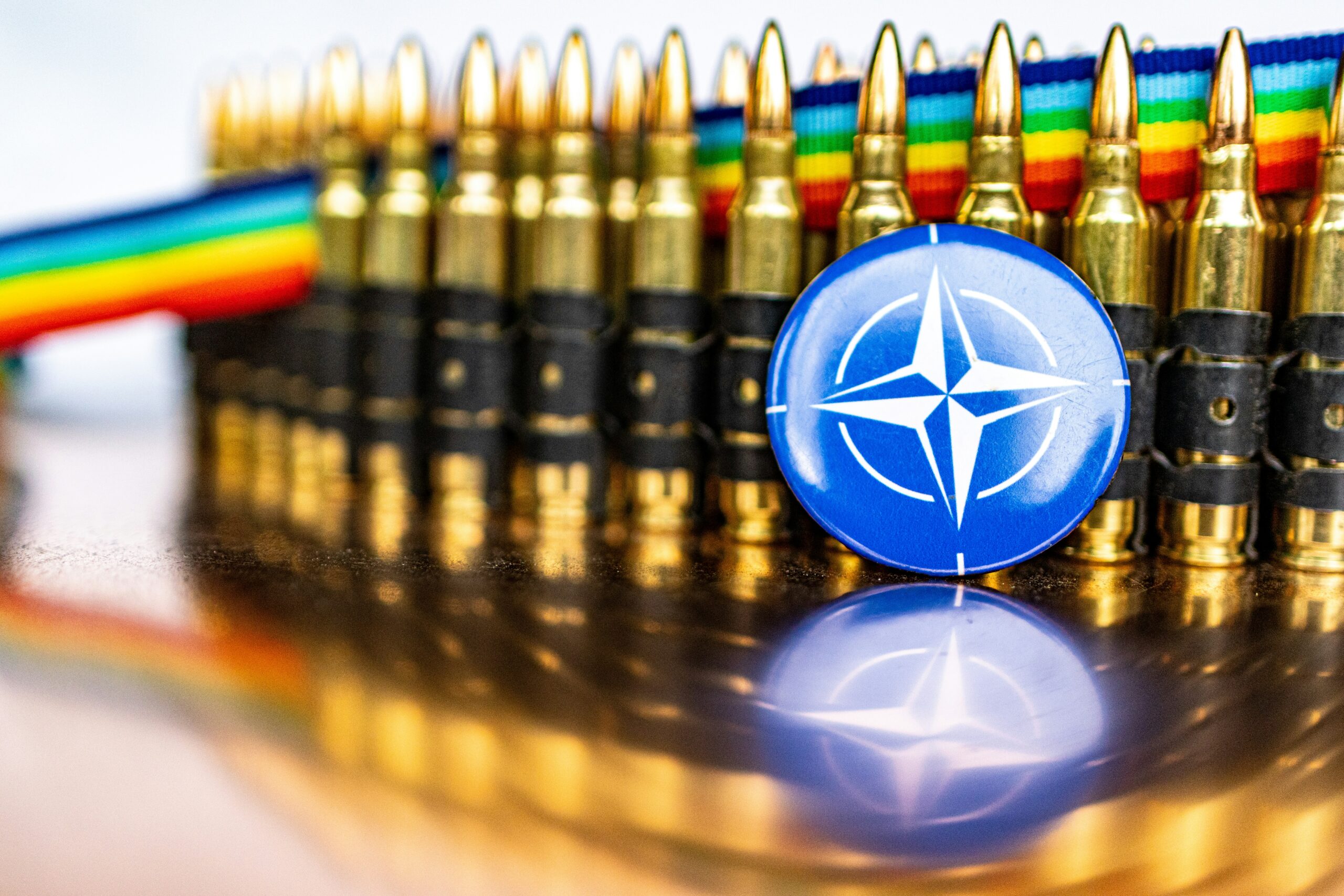
With the coming of Donald Trump as the 47th president of the United States, a new era of uncertainty dawns on the North Atlantic Treaty Organisation (NATO). Few institutions have embodied the post-war Western order as completely as NATO. Founded on the principle of collective defence, it has stood as a barricade against aggression and a testament to transatlantic solidarity. Today, however, questions linger about its future. Donald Trump’s open disdain for the alliance, calling it “obsolete” and talking about withdrawal and even threatening to ignore Article 5 in the face of Russian aggression against members who do not live up to the financial goals set in 2006 under President Bush, sent tremors through European capitals and forced a reckoning: what would NATO be without its most powerful member?

The departure of the United States from NATO, whether as a deliberate retreat or a symptom of inward-looking American politics, would undoubtedly be a profound shift. Losing the world’s largest military power and chief financial backer would not be without consequence. Yet this scenario, dire as it may seem at first glance, could also be an opportunity for NATO to evolve into something more self-sufficient and distinctly European. While the transition would be fraught with challenges, the long-term benefits of a more autonomous NATO should not be overlooked.

Europe is far from defenceless. The continent is home to some of the world’s most capable militaries. France, with its nuclear arsenal and global reach, has a deeply ingrained strategic culture. The United Kingdom, despite its political turbulence, remains a formidable military power with a robust nuclear deterrent and significant expeditionary capacity. Italy, often underestimated, contributes a well-trained and versatile armed force. The latest NATO members, Sweden and Finland, bring advanced military technology, intelligence capabilities, and a strategic position in the Baltic region. Together, the remaining alliance represents a powerful bloc that could form the backbone of a Europe-centred NATO.

In the short term, an American withdrawal would necessitate significant adjustments. European nations would need to increase defence spending and deepen their cooperation, ironically fulfilling Trump’s wish. The instinct to look inward, focusing on national priorities or squabbling over burden-sharing, would need to be resisted. Yet, these initial hurdles could pave the way for a more cohesive and independent alliance, one no longer tethered to the priorities of Washington but fully capable of shaping its own strategic direction.

A Europe-led NATO would still uphold the alliance’s core mission: the defence of democracy and the deterrence of authoritarian aggression. Freed from the constraints of U.S. geopolitics, it could approach global challenges with a perspective better aligned to Europe’s interests. Whether confronting Russian expansionism, responding to instability in the Middle East, or navigating the rise of China, a NATO steered by Europe would be better positioned to act decisively and coherently.

Such a transformation could also have a stabilising effect on the European Union. In an era of political fragmentation, NATO’s collective security framework could serve as a unifying force, reminding member states of the importance of collaboration in the face of common threats.

Europe has been the beneficiary of American security guarantees since the Marshall Plan, and this might be the time to once again take full ownership of its defence. A NATO led by Europe would demonstrate that the continent is not merely a cultural and economic powerhouse but also a serious geopolitical actor, capable of securing its place in a rapidly changing world.

The future of NATO will ultimately depend on the resolve of European leaders. While Trump’s presidency may have accelerated the discussion, the question of Europe’s strategic autonomy is larger than any single American president. If Europe seizes this moment, it could transform NATO into a more versatile alliance, better equipped to face the challenges of the 21st century. And perhaps, in the end, the United States would come to see this evolution not as a loss but as the fulfilment of NATO’s original purpose: a partnership of equals, united in the defence of shared values.
Words of Resilience: Churchill, Zelensky, and the Power of Speech

Illustration: Canva


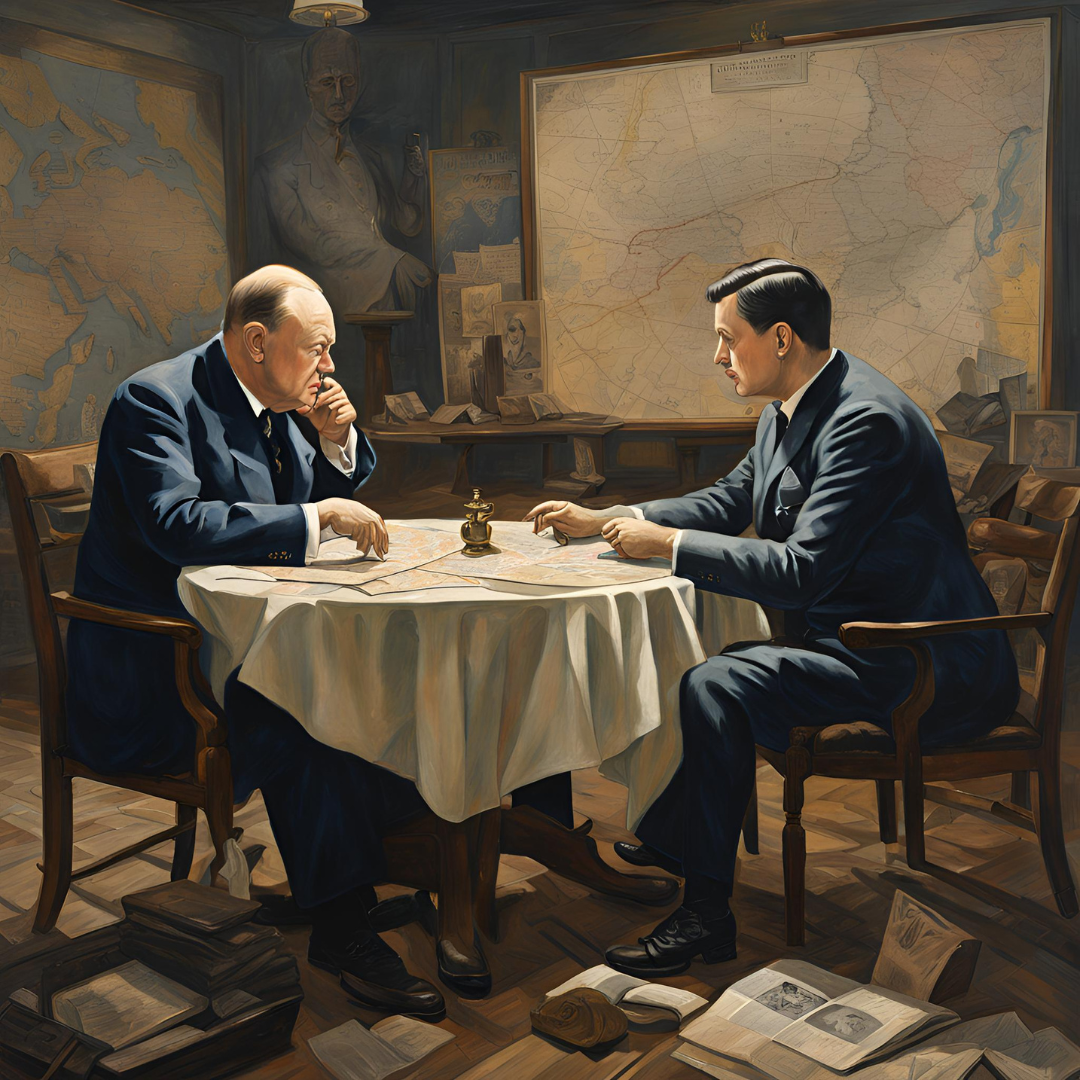
It is a grim consolation that humanity so often finds its finest self in the face of catastrophe. It is precisely in the shadow of destruction that certain individuals distil the essence of leadership. Winston Churchill and Volodymyr Zelensky—two men separated by time, culture, and geography—stand as unflinching embodiments of a nation’s will to resist. They share a common weapon: the power of words and an unyielding faith in the resilience of their people.

Churchill’s famous words, delivered in the bleak days of 1940, are not merely a declaration of defiance but a poetic act of fortification. “We shall fight on the beaches, we shall fight on the landing grounds, we shall fight in the fields and in the streets, we shall fight in the hills; we shall never surrender.” These words are more than a pledge to the British people; they are a challenge to the enemy: Bring your terror, but know that our resolve is a wall you will never breach. These words are dynamite; they are less a rhetorical flourish than a stark, nuclear-powered refusal to capitulate.

Volodymyr Zelensky, on the other hand, faced his moment of destiny with similar clarity when, on the eve of Russia’s full-scale invasion, he stood before a camera, surrounded by his aides, and declared, “We’re all here. Our military is here. Citizens in society are here. We’re all here defending our independence, our country, and it will stay this way.” The simplicity of his statement is its strength. It is both a reassurance and a rallying cry. No one—least of all Zelensky himself—could have predicted that this unassuming man, whose career had been in comedy and popular culture, would become the emblem of his nation’s indomitable spirit.

The parallels between these men are striking, not least in their ability to wield language as a form of resistance. Both understood that words, at their most potent, are actions in themselves. Churchill crafted his speeches with a pen dipped in steel; Zelensky, armed with a smartphone and an earthy tone, embodied his country’s defiance in real time. Their words became both shield and sword, directed as much at their own people as at a watching world.

But the contrasts are just as revealing. Churchill’s Britain had its venerable history, traditions, and empire to lean on. His speeches were suffused with a backward glance to a glory that was already fading. Zelensky, by contrast, represents a people whose history is a scarred palimpsest of conquest and loss, a nation still striving to define its modern identity. For him, the fight is not only about defence but about defining what Ukraine is and what it can become.

Ultimately, their greatness lies not in personal charisma or background but in their roles as mirrors. They reflect the best of their respective peoples: determination, pride, and a willingness to stand firm when all seems lost. It is a kind of leadership the world rarely sees but one we can only hope it will never forget.

The History of Revolutions and Syria’s Fragile Future

Photo: Mahmoud Sulaiman

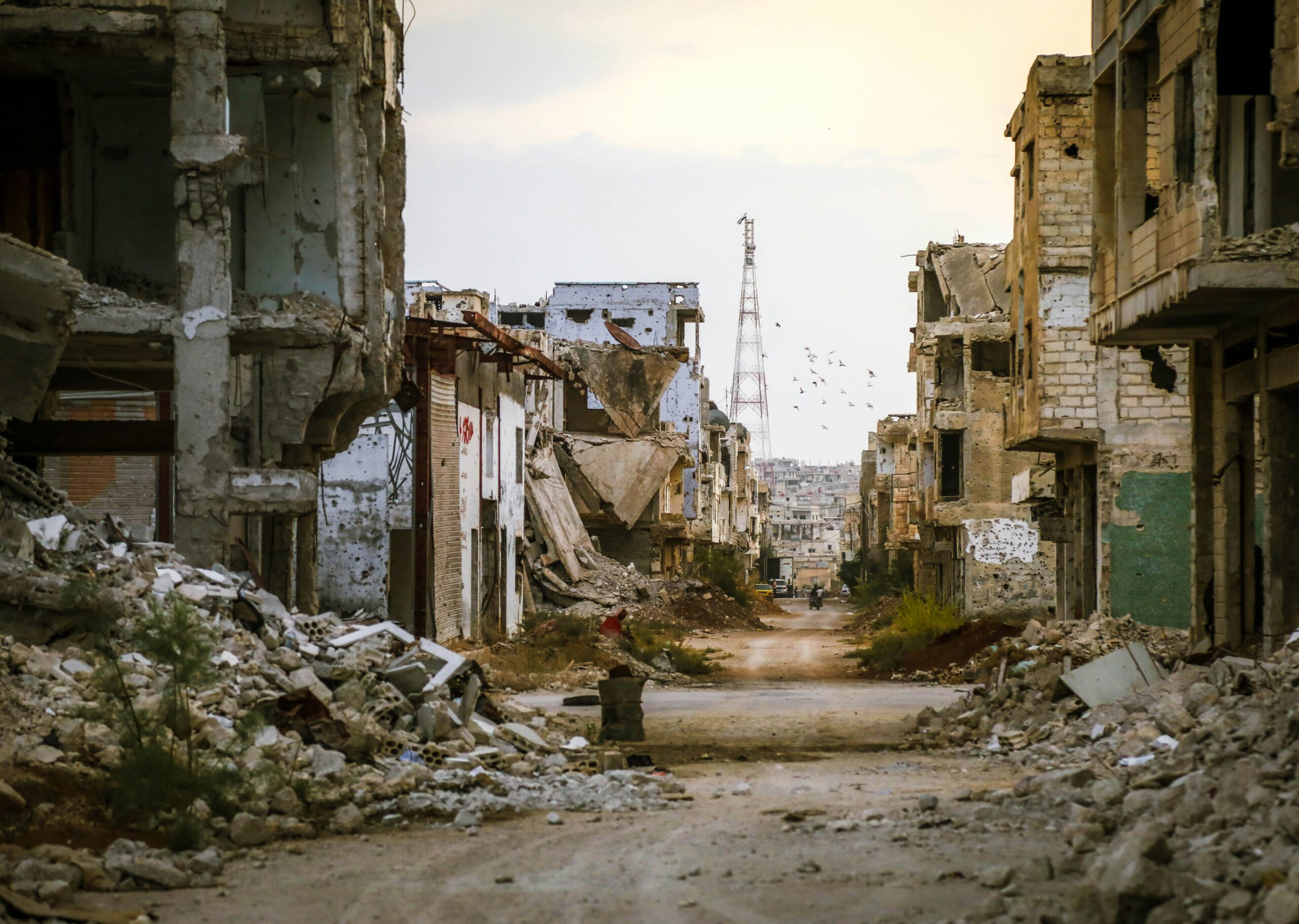
The dust of Syria’s revolution had barely settled when the country’s new leader, Ahmed al-Sharaa (previously known under the nom de guerre Abu Mohammed al-Golani), addressed the nation from the Umayyad Mosque in Damascus. He promised that Syria would become a nation where minorities are included and respected within its borders. Two days later, the parliament was dissolved, and a transitional government is now set to lead the country and review the constitution.

For those who observed the Arab Spring with naive hope for a new dawn in the Middle East, Syria long stood as a tragic epitaph for these dreams. Across much of Europe and North America, the uprisings were portrayed as an Arab version of 1989—a march toward liberal democracy that would dismantle the oppressive regimes of the Middle East. But this romantic vision obscured an uncomfortable truth, and if there is one lesson to be drawn from history—from the revolutions in Iran, Afghanistan, and Libya—it is that revolutions are rarely the architects of freedom.

It is tempting to see Syria’s suffering as a tragedy of unique scale and circumstance. Which, indeed, it is for the hundreds of thousands who have lost their lives in the civil war. At the same time, we can achieve a greater understanding if we look at it as part of a larger historical pattern. Revolutions—from Tehran to Tripoli—share the trait of being easier to ignite than to control, and the West, in its eagerness to cheer the fall of dictators, consistently fails to foresee the hydra heads that grow from their ruins.

Think of Iran in 1979. The revolution swept away the Shah’s regime only to install one whose theocratic rigidity was alien not only to its sponsors but also to the revolutionaries themselves. Afghanistan offers an even darker vision of the future. The Saur Revolution of 1978 and the subsequent chaos led to the Soviet invasion, and the U.S.-backed mujahideen paved the way for decades of war, Taliban rule, and subsequent American occupation. When the Taliban finally regained power in 2021, forcing the American military into a humiliating withdrawal, spokespersons promised that a new, softer order awaited. Beautiful words that soon proved short-lived. Today, women in Afghanistan are forbidden to speak in public and, according to the law, must even speak with a hushed voice in their own homes.

The West’s gravest misconception lies in its view of revolutions as binary struggles: the people versus the regime. This narrative, more headline-friendly than truthful, fundamentally fails to grasp the complexity of societies fractured by sectarianism, religion, tribal loyalties, and historical grievances. In Libya, Muammar Gaddafi’s overthrow was celebrated as a victory for freedom, but in the ensuing power vacuum, the nation transformed into a failed state that, 14 years after Gaddafi’s death, has yet to rise from the ashes and remains a springboard for the refugee tragedy unfolding in the Mediterranean.

For those inclined toward optimism, the Arab Spring once promised a modern transformation of the region. In practice, it more closely resembled the French Revolution’s tendency to consume its own. The fact that the Assad regime has been firmly swept aside, must, despite all this, be seen as a victory for the Syrian people. But the rebels who are now set to replace him—Hayat Tahrir al-Sham (HTS), the Free Syrian Army, the Kurdish YPG, and Islamist factions like Jabhat al-Nusra and ISIS—have long been at war not only with the regime but also with one another.

Syria’s future, therefore, hangs by a thread. If there is a way forward, it lies not in Western fantasies of yesteryear, but in the slow work of reconciliation, institution-building, and reckoning with history. At the same time, history provides a brutal reminder: for Syria to become one of the few exceptions, it will take far more than beautiful words.

Kyiv Stands in Act of Defiance

.
Originally written in April 2024

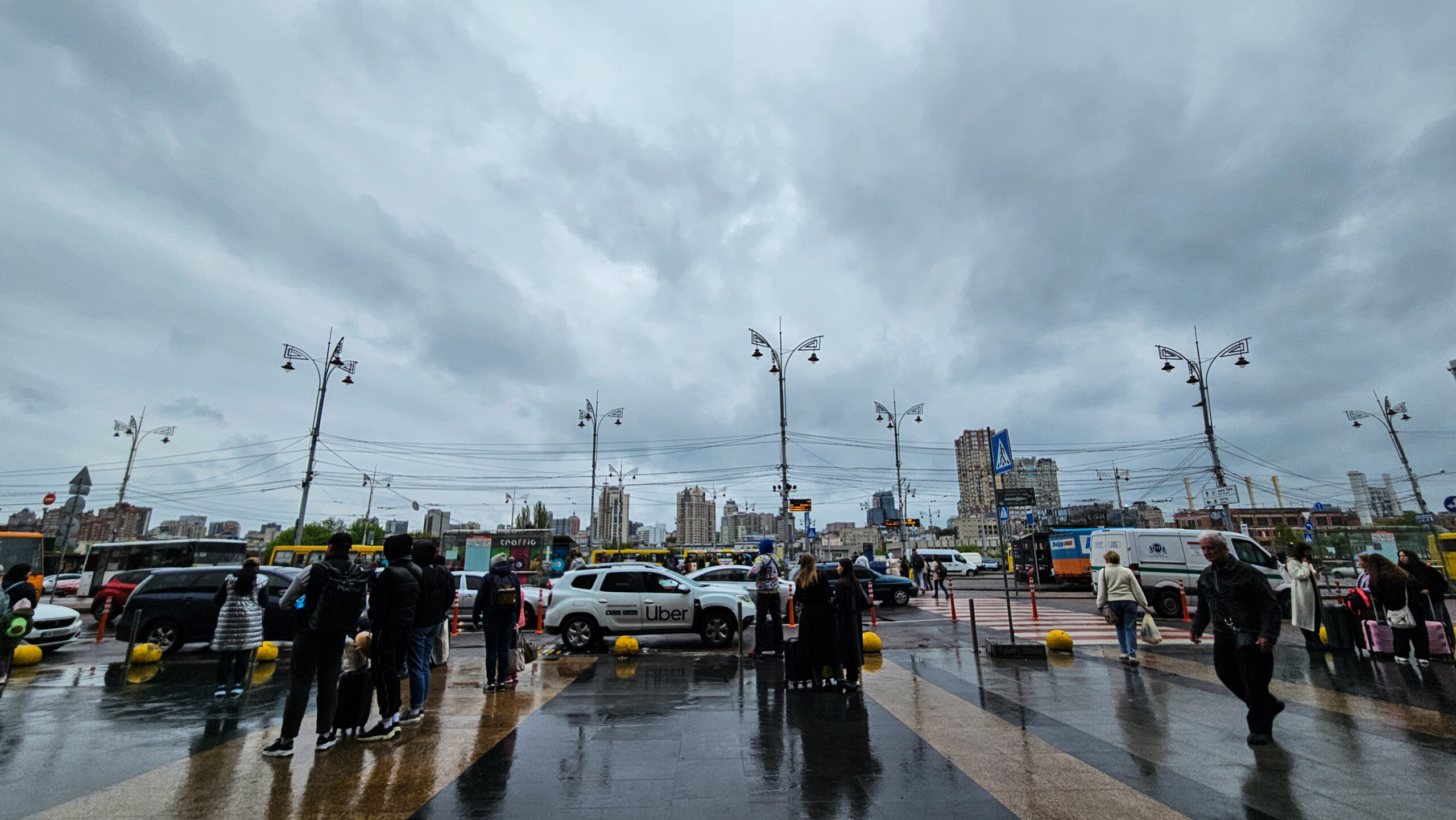
The strangest thing about arriving in Kyiv is how normal everything is. The train from Warsaw arrived exactly on time. Hours before, the city of Chernihiv, located two hours north of Kyiv, was hit by a Russian missile strike, killing 18 people and injuring 78. Yet life outside the train station goes on as usual, and the city is full of afternoon activity. Taxis are lined up outside the main entrance. Across the street is a McDonald’s. On the way into Kyiv, the train passed Irpin, where the Russian column meant to take the Ukrainian capital was finally stopped and forced back in March 2022. Today is a Thursday in mid-April 2024, and the rain falls lightly and steadily over the city.

In recent months, Russian troops have advanced on the battlefield, pushing back the Ukrainian forces, who are at a disadvantage and, above all, lack the same capacity and access to ammunition. According to several reports, Ukrainians can fire one artillery shell for every ten fired by the Russians. Despite this, there is no sign that the Ukrainian resolve is weakening. According to a survey commissioned by the Munich Security Conference in 2023, 89% of Ukraine’s population believes the country should continue fighting even if Russia resorts to nuclear weapons.

On the train to Kyiv, I met a professor of political science at one of the universities in Kyiv, whose name will be left out for privacy reasons. He was on his way home from a human rights conference in Warsaw. When first asked about the war, he answered that there is no future in which Ukraine cedes territory to Russia to make peace. “We’ve given up too much to back down now. We will continue until there are no Russian troops left on Ukrainian soil.” But when I later asked how he thinks it will end, he fell silent for a long moment before saying with a sorrowful sigh, “I really don’t know.” His mentality mirrors much of the sentiment of the country: proud defiance in the face of monumental uncertainty.

The first impression of the city is that it looks just as it did before the Russian invasion began. Then, you see a collapsed building by the side of the road, and it’s hard to tell if it’s the kind of decay common in the former Soviet Union or the kind caused by artillery. The roof and part of the exterior wall have caved in, and all the windows are missing. It is one of several dilapidated buildings in the city. Some of them even have full-grown trees inside, with branches stretching out through the openings where glass panes once were. It serves as a reminder that not all collapsing buildings are damaged by war. Somehow, this only makes the city more beautiful. For it is a beautiful city in its own way. The city centre is teeming with ornate buildings from the last century and wide cobblestone boulevards. On the outskirts, the cityscape shifts to a Soviet grey. Central Kyiv has more in common with Paris or Barcelona than with many other European cities that we more easily associate with Europe based on their geographical location. It is in many ways an architectural memory of Russian imperialism’s desire to be part of continental Europe and the stalinist concreete a reminder of why this is not the case. At least not yet.

At the heart of the city is Maidan, which literally means ”square.” This is where the Ukrainian revolution began over ten years ago and set in motion the long chain of events where seeking freedom was punished by war. At one end of the square, thousands of small Ukrainian flags are planted in the flowerbeds, and hundreds of photographs of fallen soldiers border the flowers. Some of them are pictured as soldiers in full gear. Others look like profile pictures of fathers and cousins in plaid shirts and awkward smiles. It is mostly former civilians who die in this war. They are friends, accountants, and school teachers called to the front by honour of necessity, whose children will grow up with the memory of a hero instead of a parent. According to Ukrainian sources from February 2024, 31,000 Ukrainian soldiers have died on the battlefield.

The granite slabs covering Maidan are cracked and shift when you walk across the square. On a rainy day, like today, rainwater gathers in the cracks and almost lifts the granite from the foundation as they wobble. In the pedestrian tunnels leading to the square, water drips from the ceiling. The Independence Monument, however, still shines golden even under heavy clouds. The luxurious TSUM department store remains open, but customers are few, and the staff stand at their stations, politely greeting with bored smiles. In the men’s department, visitors are met with military clothing and camouflage gear. On the other side of the square, military roadblocks are gathered. They are no longer deployed on the parade street but remain close at hand. Further up the street, however, there is a military checkpoint. One of many in the city.

In a bar on the other side of town, a bartender offers his perspective on the normality that seems to surround the city. It is still early, yet the bar is already filling up, and several tables are reserved. Bars in Kyiv are open until 11 p.m. so guests can get home in time for the nightly curfew, which starts at midnight. “The normality is an illusion,” he begins, then searches for the right words to explain. “We have shelters in our basements and shelters in our minds. It’s frightening with everything that’s happening, but you have to block it out. Otherwise, you can’t function.” He is 30 years old and grew up in Kyiv. “I am scared, but I want to stay. This is my hometown. Besides that, I don’t have the 8,000–10,000 USD needed to bribe my way out of the country. There are ways out created by corruption, but I don’t have that kind of money.” He continues, mixing a new drink as he speaks. “I would go to the front if I were called up,” he explains, his voice somewhat uncertain. “When I did my military service 12 years ago, our military was very poor, and our weapons were broken. Today our military is very strong.”

The following day, spring arrived in Kyiv. The streets were filled with people, and there were long queues at coffee stands and ice cream parlours along the boulevard. Then, suddenly, air raid sirens bellowed across the city. The sound is like a slowly undulating lament. But nobody reacted. No panic broke out. Some turned their heads, but no one even quickened their pace. Others look down at their phones. There are apps and Telegram channels with detailed information about everything the Russian army is doing. Then the alarm fell silent again, and life continued.

On 20 April, the United States Congress voted for the proposal for new support for Ukraine, and across Kyiv, a collective sigh of relief was felt. People gathered in groups around their phones, and for many, it was as if hope had returned.

On the trains to Kyiv, most of the passengers were men. On the train from Kyiv, it is almost exclusively women. Under the current state of martial law, men between the ages of 18 and 60 are not allowed to leave the country. On the train towards Warsaw sits Tatiana. She is 66 years old and comes from Kharkiv, one of the cities hardest hit by the war. She is on her way to Valencia to help her daughter take care of her grandson until he can start nursery. Her grandchild was born in January 2022, and when Russia attacked, Tatiana’s daughter fled to Spain with her newborn child. Tatiana’s husband remains in Kharkiv. Many of her friends have lost their homes in the Russian artillery attacks, but her home is still standing. “I am often afraid when I read the news from Spain about what is happening back home in Ukraine. When I am home, it doesn’t feel as dangerous. At least then, I am at home,” she explains.